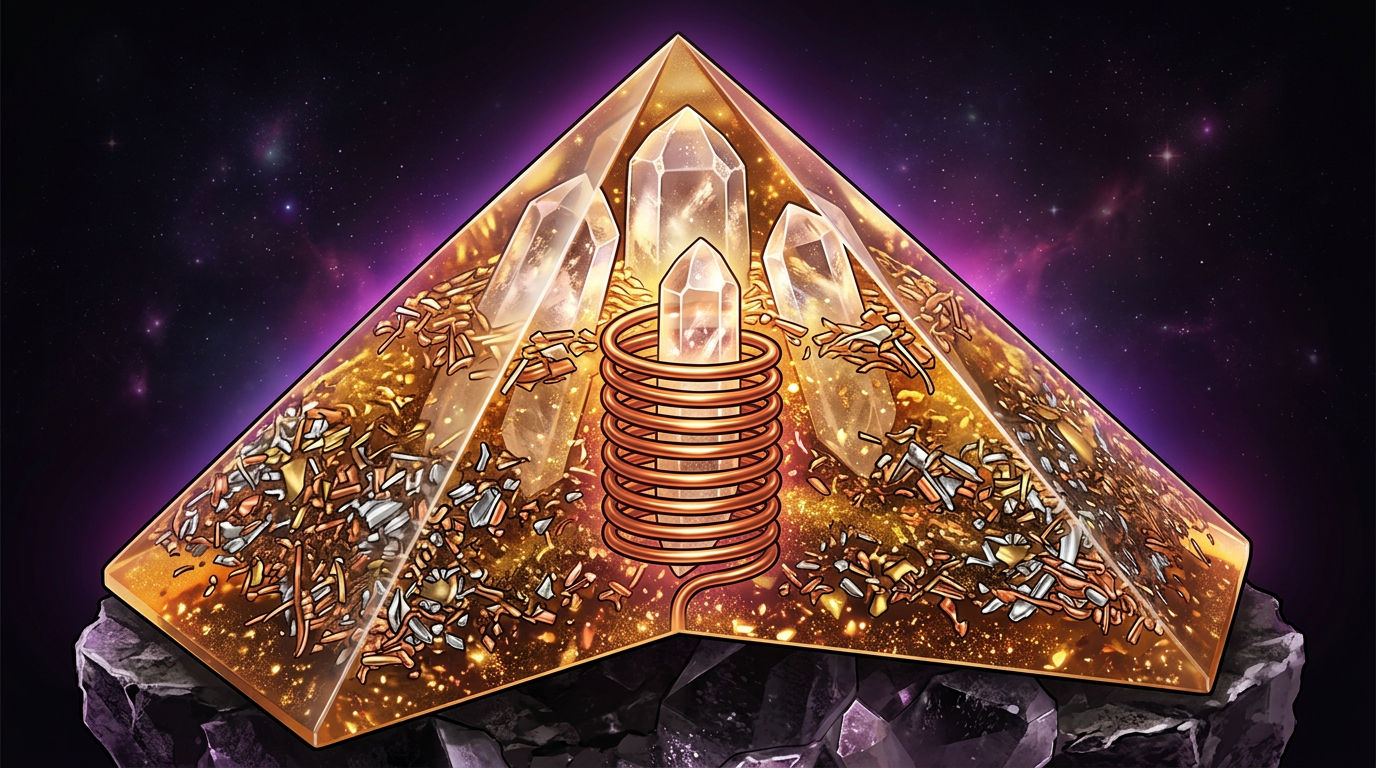
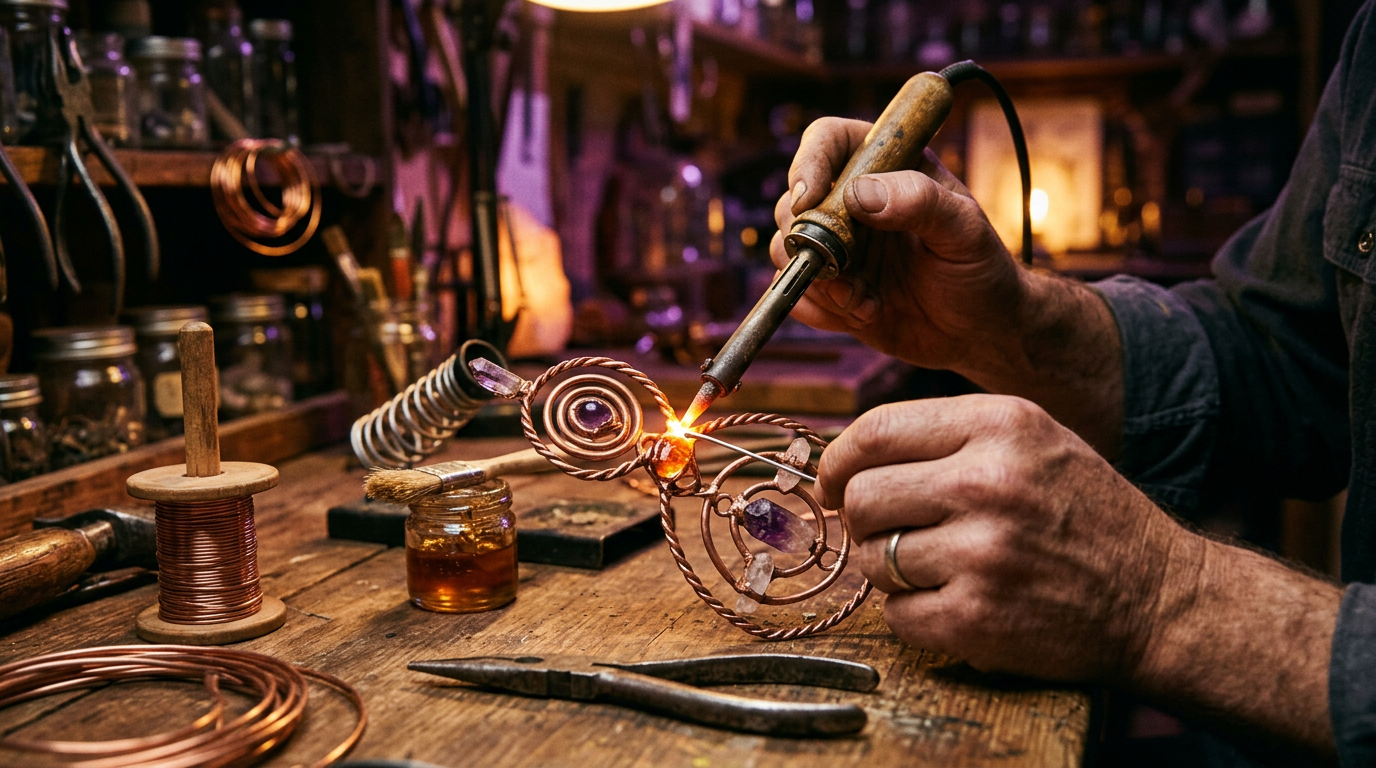
Not every energy tool comes in a box. Some of the most striking instruments in the energy healing tradition are the ones you build yourself, from materials you can find at a hardware store, shaped by your own hands and intention.
A cloud buster is a large orgone energy device: six copper pipes rising from an orgonite base, pointed toward the sky. It reaches upward where orgonite pyramids sit on your desk. It belongs outdoors, on stable ground, where practitioners believe it interacts with atmospheric energy in ways that smaller tools cannot.
If you're curious about building your own orgone devices, experimenting with the lineage that connects Reich to Croft to today's makers, or simply exploring the wider landscape of EMF protection and energy work beyond pyramids and crystals, this guide walks you through what a cloud buster is, how it's built, and what to expect when you make one.
What Is a Cloud Buster?
The Orgone Energy Connection
The cloud buster traces directly back to Wilhelm Reich, the same Austrian-American psychiatrist whose orgone energy theory gave birth to orgonite. In the 1950s, Reich developed the original cloudbuster: an array of hollow metal tubes connected via flexible hoses to a body of water. Reich claimed the device could influence what he called "orgone energy" in the atmosphere, potentially affecting weather patterns and clearing what he termed "DOR" (deadly orgone radiation), a concept he used to describe stagnant or harmful atmospheric energy.
Reich conducted his experiments in Maine and Arizona. The Maine connection resonates with The Northern Daisy's own roots. His work was deeply controversial. The FDA obtained an injunction against his devices, and Reich died in federal prison in 1957. But his ideas survived. Practitioners continued to develop them, and the cloud buster evolved into the form we know today.
In the 1990s and 2000s, Don Croft adapted the cloudbuster concept by replacing Reich's water-grounding mechanism with an orgonite base, creating what became known as the "chembuster." Croft's design combined copper pipes, quartz crystals, and an orgonite matrix (resin mixed with metal shavings). This version became the standard in the modern orgone community because it's simpler to build, safer to use, and more accessible for home practitioners. No hoses, no water source, no complex plumbing. Just pipes, crystals, and orgonite.
How a Cloud Buster Is Built
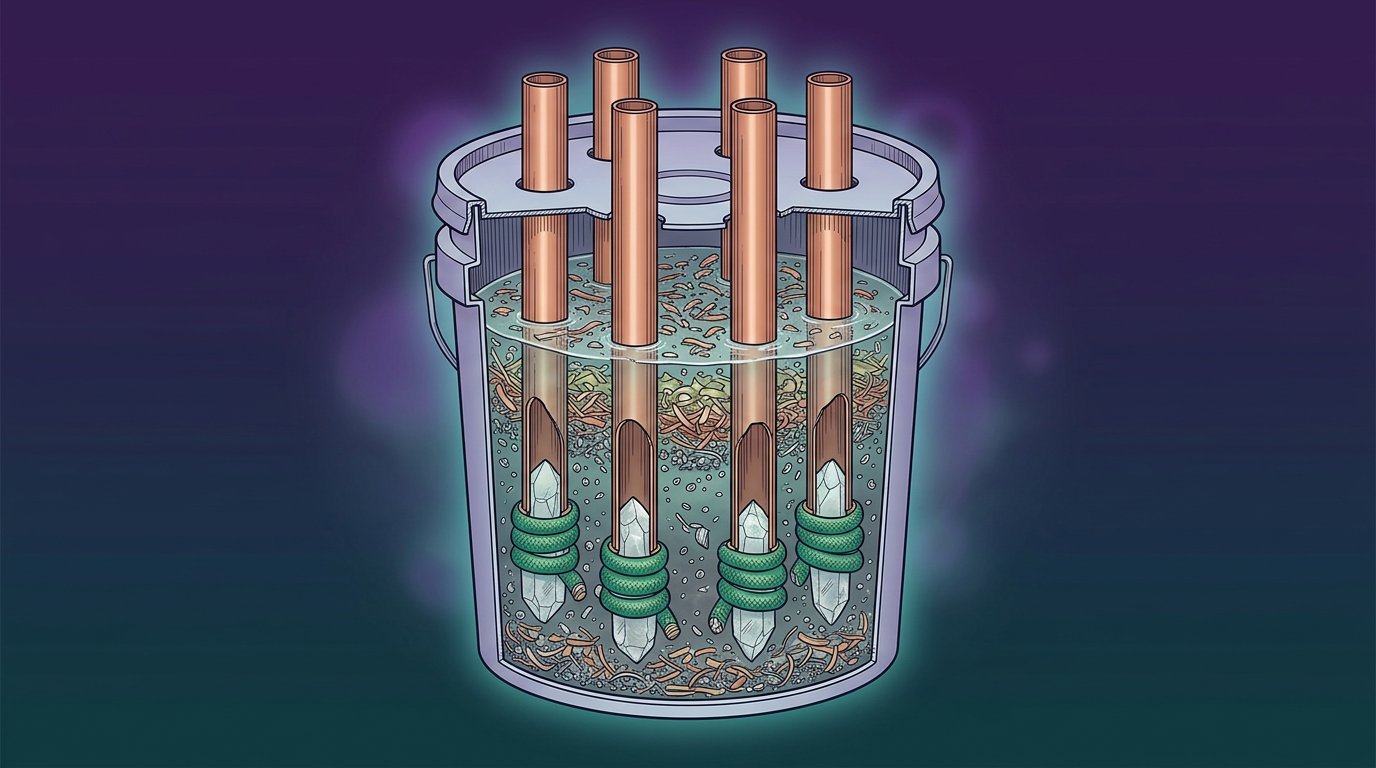
A modern cloud buster (chembuster design) consists of six copper pipes, typically one inch in diameter and six feet long, embedded upright in a bucket of orgonite. Each pipe has a double-terminated quartz crystal secured in its base, wrapped in a short section of garden hose and sealed with epoxy. The orgonite base is formed by pouring catalyzed resin mixed with metal shavings around the pipe bases in layers, allowing each layer to cure before adding the next.
The sacred geometry of the design matters to many practitioners. Six pipes arranged in a circle create a hexagonal footprint, a pattern that appears throughout nature and sacred geometry traditions. The copper conducts. The quartz amplifies. The orgonite matrix does the transmuting work that practitioners associate with orgone energy devices.
The result is a large, striking device. Pipes pointing straight up, anchored in a heavy orgonite base. Most practitioners place them outdoors on stable, level ground.
What Practitioners Report
Practitioners who work with cloud busters describe a range of observations: clearer skies, a sense of energetic calm in the surrounding area, improved plant growth nearby, and a general feeling of atmospheric lightness. Some report that the space around the device feels "lighter" or "cleaner" over time.
The Northern Daisy approaches cloud busters as fascinating tools for exploration and practice, not as devices with guaranteed outcomes. If you build one, you're participating in a lineage of experimenters. What you observe is yours to document.
Building Your First Cloud Buster: Materials and Assembly
This overview gives you the full picture. A dedicated step-by-step build guide with photos would fill its own post, but here's what the process looks like from start to finish.
Materials You'll Need
- 6 copper pipes (1" diameter, 6 feet long)
- 6 double-terminated quartz crystals
- A 2-gallon plastic bucket
- Metal particles (aluminum filings, steel shavings)
- Polyester or epoxy resin (~1.5 gallons)
- 6 copper end caps
- Garden hose segments (short pieces for wrapping crystals)
- Epoxy adhesive (for crystal-to-cap bonding)
- Plywood templates for pipe spacing
- Safety equipment (see below)
Where to source: Copper pipes and end caps come from Home Depot, Lowe's, or any plumbing supply store. Metal particles are often available free from local machine shops; otherwise check eBay or Amazon. Resin is available from Amazon, Tap Plastics, or craft supply stores. Quartz crystals from Etsy, crystal wholesalers, or Amazon. Buckets and containers from any hardware store.
Estimated cost: $50 to $150 depending on sourcing.
If the copper work feels intimidating, start by learning the basics. Our guide on copper soldering for beginners covers the foundational skills you'll need for more complex energy tool projects.
Assembly Basics
Crystals are glued into copper end caps with epoxy, wrapped in garden hose segments, and inserted into the bottoms of the pipes. The bucket is prepared with plywood templates that hold the pipes evenly spaced in a circular pattern, typically around a 2.5-inch radius. Resin is mixed 1:1 with metal particles and poured in thin layers (no more than 2 cm per pour) around the pipe bases. Each layer must partially cure before the next is added.
The layering is critical. Resin cures through an exothermic reaction that generates heat. Pouring too thick risks overheating, cracking, or in extreme cases, fire. This is not a step to rush. Many builders spread the pours over several days, allowing each layer to fully set before adding the next.
Placement and Practical Use
A completed cloud buster weighs 30 to 50+ pounds with six-foot pipes extending upward. Place it on stable, level ground outdoors. Consider wind loading: the pipes act like sails. Secure the base against tipping. Some practitioners use concrete footings or anchor the bucket to a platform. Others place it in a sheltered corner of the yard.
Orientation varies by tradition. Some practitioners point the pipes straight up. Others angle them toward specific atmospheric features. There's no consensus on the "correct" orientation. Many builders start with vertical pipes and adjust based on their own observations.
Location matters. Practitioners often place cloud busters in gardens, on rooftops, or in open areas where the device has clear exposure to the sky. Avoid placing it where it could be knocked over by people or animals. And remember: this is not a device to rely on for agricultural or water management decisions. It's a tool for personal exploration within the orgone energy tradition.
Safety: Working with Resin
- Work outdoors or in an extremely well-ventilated area. Resin fumes can cause dizziness, headaches, and respiratory irritation. A garage with the door open is a minimum. A respirator is better.
- Wear a respirator with organic vapor cartridges. Not a dust mask. A proper respirator. NIOSH-approved, organic vapor cartridges.
- Wear chemical-resistant gloves. Resin on skin causes irritation and is difficult to remove once cured. Nitrile gloves are standard.
- Wear eye protection. Splashes happen. Safety glasses or goggles.
- Pour in thin layers. The exothermic reaction can generate enough heat to warp the container, crack the resin, or create a fire hazard if poured too thick. Never exceed 2 cm per layer.
- Keep a fire extinguisher accessible. Not likely to be needed, but essential to have on hand.
If you're building a cloud buster, take the safety seriously. The tool is rewarding. The process demands respect.
The Maker's Mindset: Why Building Your Own Tools Matters
There's something that shifts when you build a tool yourself. A purchased orgonite pyramid is powerful. One you've poured with your own resin mix, embedded with crystals you selected, cured with your own patience? That carries an additional layer. Makers in the energy tool community call it "intention embedding," the idea that the energy you bring to the creation process becomes part of the tool itself.
A cloud buster is a significant project. It takes time, materials, and care. But it's also one of the most accessible large-scale orgone devices you can build. It doesn't require advanced soldering or complex metalwork. It connects you directly to the lineage of builders and experimenters who have shaped the energy healing tradition: Reich, Croft, and the countless practitioners who poured their first bucket of orgonite and paid attention to what happened next.
Michelle Nast, the energy healer behind The Northern Daisy, started as a maker. Every orgonite pyramid in her shop was built at her own bench. She understands the difference between buying a tool and making one, and she encourages anyone drawn to this work to start where they are. A cloud buster is a big step. But it's a step worth taking if the project calls to you.
You don't need to get it perfect. You need to get started.
Explore Michelle's handcrafted orgonite pyramids, made with the same maker's intention described here.
New to orgone energy? Start with What Is Orgonite? A Beginner's Guide
Want to learn the foundational skill behind copper energy tools? Read Copper Soldering for Beginners